Multi-Armed Bandit (MAB) 이란?
Multi-Armed Bandit (MAB)은 카지노에서 보상을 극대화하기 위해 최적의 슬롯머신(“arm”)을 선택하는 문제에서 영감을 받은 적응형 실험 접근법.
MAB의 핵심은 탐색(Exploration) 과 활용(Exploitation) 사이의 균형을 맞추는 것으로, A/B 테스트 환경에서는 실시간 성능에 따라 다양한 실험군에 트래픽을 동적으로 할당하여 탐색과 활용의 균형을 유지함.
Note (탐색(Exploration) vs. 활용(Exploitation))
- 탐색 (Exploration): 현재까지의 정보가 부족하거나 덜 시도된 옵션(arm)을 테스트하여 더 나은 대안이 있는지 확인하는 행동. 단기적인 손실을 감수하더라도 장기적으로 최적의 해를 찾을 가능성을 높임.
- 활용 (Exploitation): 현재까지의 데이터상 가장 좋은 성과를 보인 옵션(arm)을 선택하여 즉각적인 보상을 극대화하는 행동.
A/B 테스팅 대비 장점
- 동적 트래픽 할당: 실시간으로 성과를 분석하여 더 나은 버전에 트래픽을 동적으로 할당함.
- 빠른 수렴: 테스트 중에 학습하고 적응하므로 전통적인 A/B 테스트보다 더 빨리 결론에 도달함.
- 효율적 자원 사용: 테스트가 끝날 때까지 기다리지 않고, 실험 기간 동안의 보상(클릭, 전환 등)을 극대화함.
- 다중 변수 처리: 두 개 이상의 버전을 동시에 효율적으로 테스트할 수 있어 다변량 테스트에 더 적합함.
- 기회비용 최소화: 성과가 저조한 버전에 사용자를 노출시키는 부정적 영향을 신속하게 줄여 기회비용을 최소화함.
- 지속적인 학습: 별도의 테스트 기간 없이 지속적으로 운영되며 학습하므로, 사용자 선호도가 변하는 환경이나 장기적인 최적화에 적합함.
이론적 배경 및 전략
MAB는 상태(state)가 없다는 점에서 마르코프 결정 과정(MDP)의 단순화된 버전으로 볼 수 있음. 목표는 시간 T까지의 누적 보상을 최대화하는 것.
- : 시간 t에서의 행동 (arm 선택)
- : 행동 에 따른 보상
최적의 행동 은 기대 보상 를 최대화하는 행동으로 정의되며, 최적의 보상 확률 는 다음과 같이 표현됨:
- : 이론적으로 얻을 수 있는 최적의 보상 확률
- : 행동 의 가치(Quality) 를 나타내는 함수
- : 행동 를 선택했을 때의 기대 보상
- : k개의 arm(광고) 중 i번째 arm의 true 보상 확률 (예: )
Bandit 전략
탐색(Exploration)을 수행하는 방식에 따라 MAB 문제를 해결하는 여러 전략들이 존재함.
- ε-Greedy algorithm
- Upper Confidence Bounds (UCB)
- Bayesian UCB
- Hoeffding’s Inequality
- Thompson Sampling
Bandit 전략: ε-Greedy 알고리즘
ε-Greedy는 가장 간단하고 직관적인 MAB 전략 중 하나. 이라는 작은 확률로 무작위 탐색을 수행하고, 대부분의 경우()에는 현재까지 가장 성과가 좋았던 옵션을 활용함.
-
초기화 (1단계): 각 arm을 한 번씩 실행하여 초기 보상 데이터를 확보.
-
반복 (2단계): 매 라운드 t마다 다음 규칙에 따라 행동()을 선택.
- : 지금까지 arm i가 선택되었을 때의 평균 보상 → 즉, 최대 기대 보상을 주는 arm 선택
- : 모든 arm 중 하나를 균등 확률로 무작위 선택
탐색 확률 는 시간이 지남에 따라 점차 감소시켜, 초기에는 탐색을 많이 하다가 점차 확신이 드는 옵션을 활용하는 비중을 높임:
- : 조정 가능한 상수
- : arm의 개수
- : 현재 시간
- : 최적 arm과 다른 arm들 사이의 기대 보상 차이의 최솟값 (좋은 arm과 나쁜 arm의 성능 차이가 작을수록 더 오래 탐색해야 함)
Example (Epsilon-Greedy Bandit Algorithm Implementation)
import numpy as npimport matplotlib.pyplot as plt
np.random.seed(42)
# Epsilon-Greedy Bandit Algorithmclass EpsilonGreedyBandit: def __init__(self, n_arms, c, delta_min): self.n_arms = n_arms self.c = c self.delta_min = delta_min self.arm_rewards = np.zeros(n_arms) # cumulative rewards for each arm self.arm_counts = np.zeros(n_arms) # number of times each arm was pulled self.total_counts = 0 # total number of pulls
def calculate_epsilon(self): total_counts = self.total_counts + 1 # to avoid division by zero epsilon = min(1, (self.c * self.n_arms) / (self.delta_min ** 2 * total_counts)) return epsilon
def select_arm(self): epsilon = self.calculate_epsilon() if np.random.rand() < epsilon: return np.random.randint(self.n_arms) # Explore else: return np.argmax(self.arm_rewards / (self.arm_counts + 1e-5)) # Exploit
def update(self, arm, reward): self.arm_rewards[arm] += reward self.arm_counts[arm] += 1 self.total_counts += 1
# Simulation three ads with different reward distributionstrue_mean_rewards = [0.3, 0.5, 0.7]reward_distributions = [lambda: np.random.binomial(1, p) for p in true_mean_rewards]
# Parametersn_arms = len(true_mean_rewards)c = 1delta_min = min(true_mean_rewards)
# Initialize banditbandit = EpsilonGreedyBandit(n_arms, c, delta_min)
# Run simulationn_rounds = 10000rewards = []ad_selections = []cumulative_rewards = np.zeros(n_rounds)traffic_allocation = np.zeros((n_rounds, n_arms))
for t in range(n_rounds): selected_ad = bandit.select_arm() ad_selections.append(selected_ad) reward = reward_distributions[selected_ad]() rewards.append(reward) bandit.update(selected_ad, reward) cumulative_rewards[t] = cumulative_rewards[t-1] + reward if t > 0 else reward traffic_allocation[t] = bandit.arm_counts
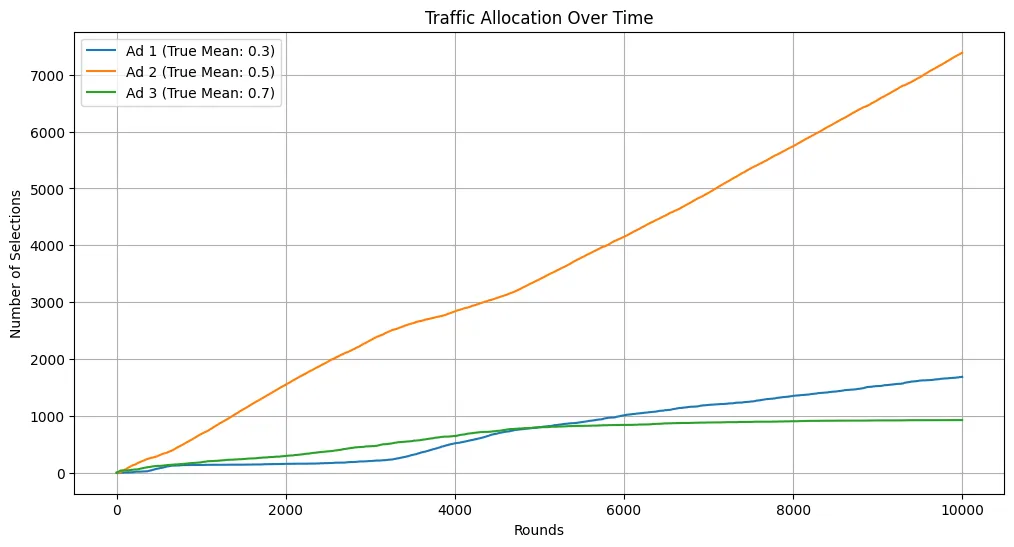
# Plot resultsplt.figure(figsize=(12, 6))for arm in range(bandit.n_arms): plt.plot(traffic_allocation[:, arm], label=f'Ad {arm+1} (True Mean: {true_mean_rewards[arm]})')plt.title('Traffic Allocation Over Time')plt.xlabel('Rounds')plt.ylabel('Number of Selections')plt.legend()plt.grid()
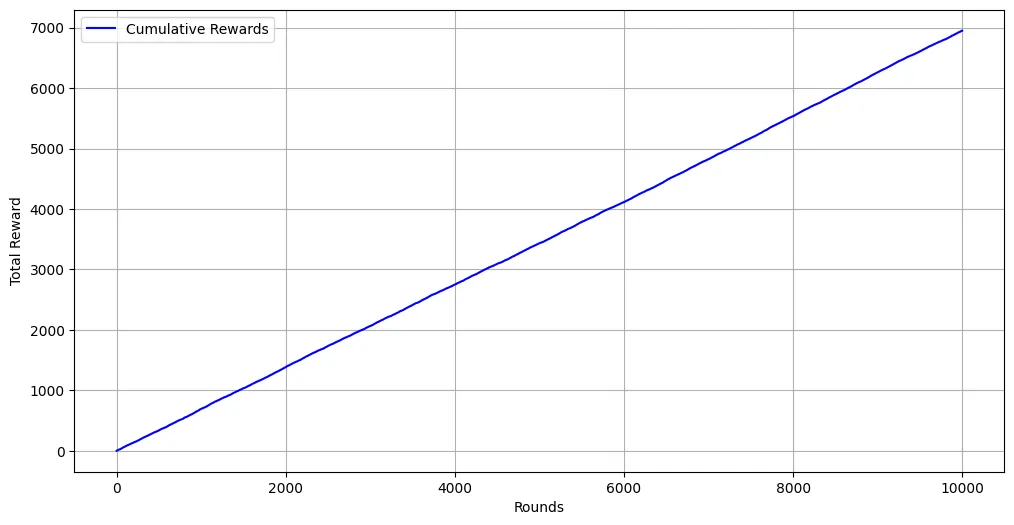
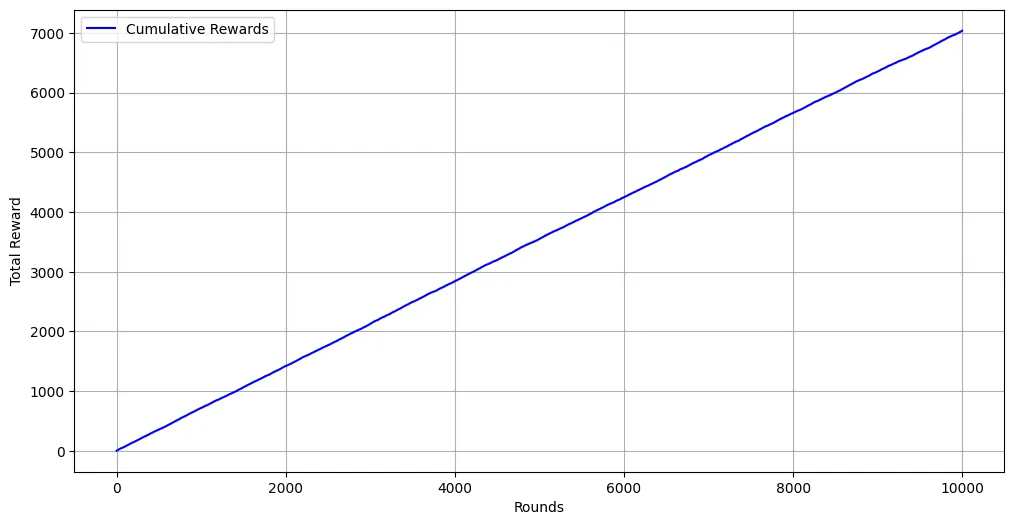
# estimatedestimated_rewards = bandit.arm_rewards / (bandit.arm_counts + 1e-5)plt.figure(figsize=(12,6))plt.plot(range(n_rounds), cumulative_rewards, label='Cumulative Rewards', color='blue')plt.xlabel('Rounds')plt.ylabel('Total Reward')plt.legend()plt.grid()
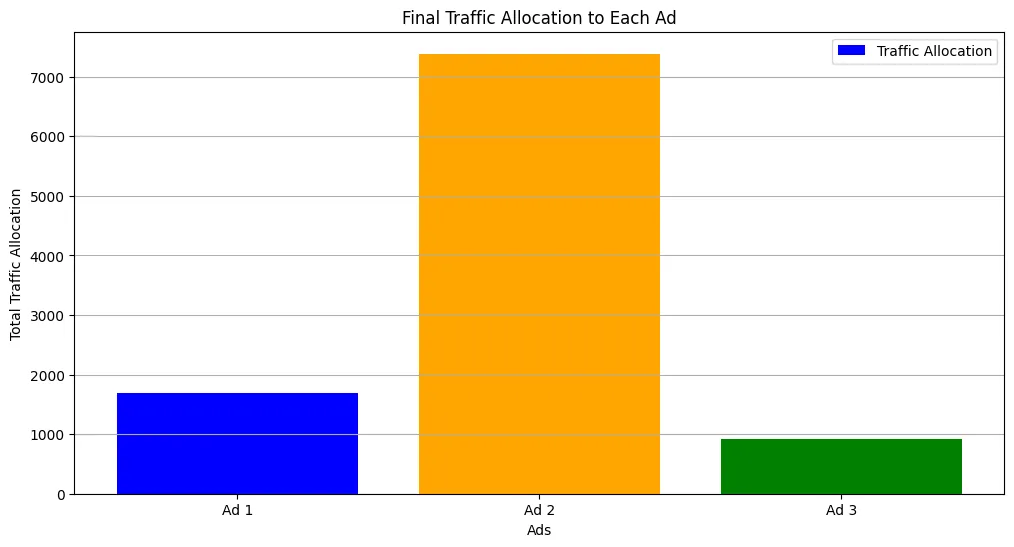
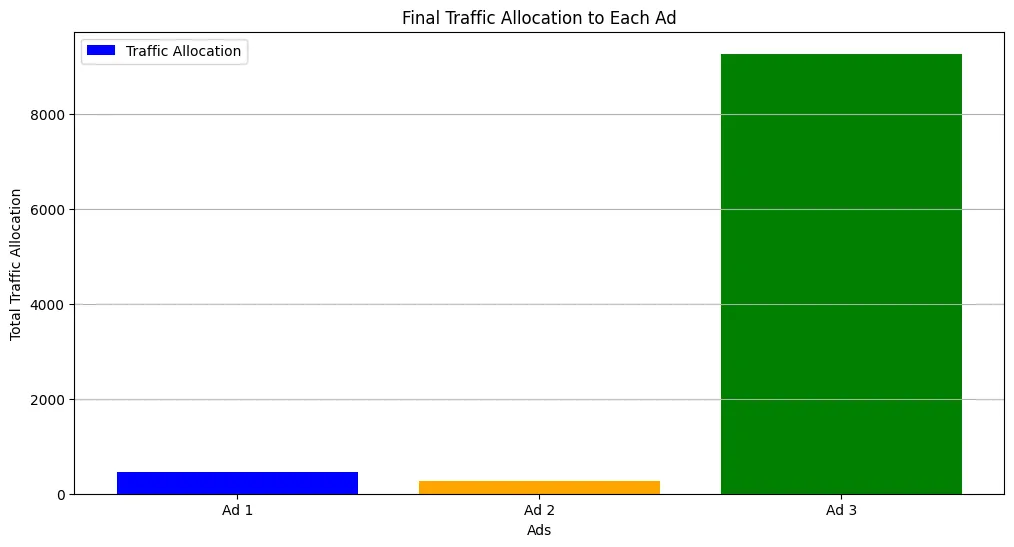
# traffic allocationplt.figure(figsize=(12,6))plt.bar(range(bandit.n_arms), traffic_allocation[-1], label='Traffic Allocation', color=['blue', 'orange', 'green'])plt.xticks(range(bandit.n_arms), [f'Ad {i+1}' for i in range(bandit.n_arms)])plt.title('Final Traffic Allocation to Each Ad')plt.xlabel('Ads')plt.ylabel('Total Traffic Allocation')plt.legend()plt.grid(True, axis='y')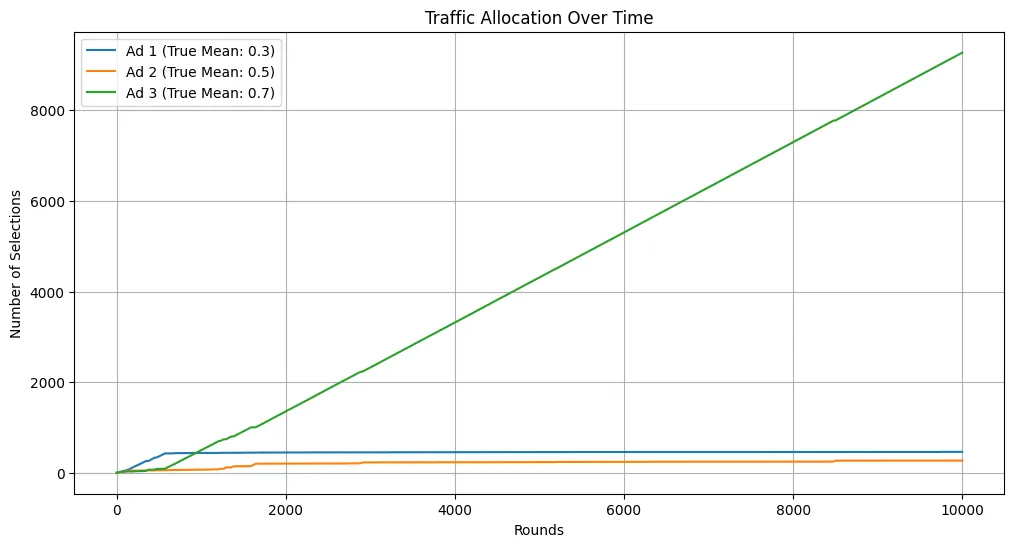
Example (Sampling Bandit Algorithm Implementation)
import numpy as npimport matplotlib.pyplot as plt
np.random.seed(42)
# Epsilon-Greedy Bandit Algorithmclass SamplingBandit: def __init__(self, n_arms): self.n_arms = n_arms self.alpha = np.ones(n_arms) self.beta = np.ones(n_arms) self.arm_rewards = np.zeros(n_arms) # cumulative rewards for each arm self.arm_counts = np.zeros(n_arms) # number of times each arm was pulled self.total_counts = 0 # total number of pulls
def select_arm(self): sample_means = np.random.beta(self.alpha, self.beta) return np.argmax(sample_means)
def update(self, arm, reward): self.arm_rewards[arm] += reward self.arm_counts[arm] += 1 self.total_counts += 1 if reward == 1: # reward observed self.alpha[arm] += 1 else: # no reward self.beta[arm] += 1
# Simulation three ads with different reward distributionstrue_mean_rewards = [0.3, 0.5, 0.7]reward_distributions = [lambda: np.random.binomial(1, p) for p in true_mean_rewards]
# Parametersn_arms = len(true_mean_rewards)c = 1delta_min = min(true_mean_rewards)
# Initialize banditbandit = SamplingBandit(n_arms)
# Run simulationn_rounds = 10000rewards = []ad_selections = []cumulative_rewards = np.zeros(n_rounds)traffic_allocation = np.zeros((n_rounds, n_arms))
for t in range(n_rounds): selected_ad = bandit.select_arm() ad_selections.append(selected_ad) reward = reward_distributions[selected_ad]() rewards.append(reward) bandit.update(selected_ad, reward) cumulative_rewards[t] = cumulative_rewards[t-1] + reward if t > 0 else reward traffic_allocation[t] = bandit.arm_counts
# Plot resultsplt.figure(figsize=(12, 6))for arm in range(bandit.n_arms): plt.plot(traffic_allocation[:, arm], label=f'Ad {arm+1} (True Mean: {true_mean_rewards[arm]})')plt.title('Traffic Allocation Over Time')plt.xlabel('Rounds')plt.ylabel('Number of Selections')plt.legend()plt.grid()
# estimatedestimated_rewards = bandit.arm_rewards / (bandit.arm_counts + 1e-5)plt.figure(figsize=(12,6))plt.plot(range(n_rounds), cumulative_rewards, label='Cumulative Rewards', color='blue')plt.xlabel('Rounds')plt.ylabel('Total Reward')plt.legend()plt.grid()
# traffic allocationplt.figure(figsize=(12,6))plt.bar(range(bandit.n_arms), traffic_allocation[-1], label='Traffic Allocation', color=['blue', 'orange', 'green'])plt.xticks(range(bandit.n_arms), [f'Ad {i+1}' for i in range(bandit.n_arms)])plt.title('Final Traffic Allocation to Each Ad')plt.xlabel('Ads')plt.ylabel('Total Traffic Allocation')plt.legend()plt.grid(True, axis='y')